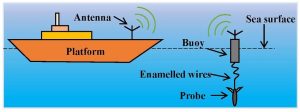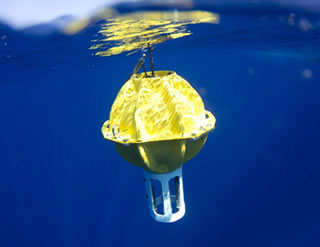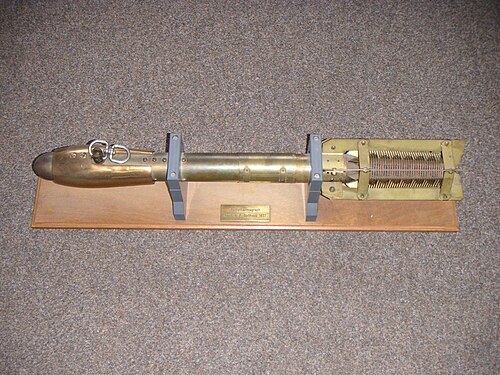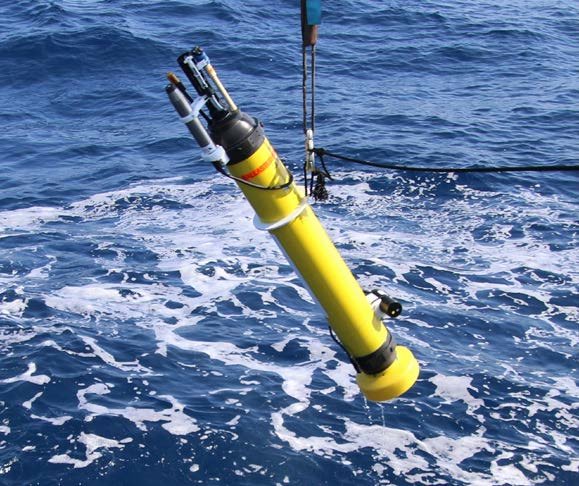
The Expendable Current Profiler (XCP) is an oceanographic instrument designed to measure the vertical profile of ocean currents from the sea surface to several hundred meters depth. According to the National Oceanic and Atmospheric Administration (NOAA), XCP is a single‑use (expendable) instrument that can be deployed rapidly from research vessels or aircraft, making it highly suitable for large‑scale and synoptic ocean observations. XCP has been widely applied in studies of ocean circulation, climate variability, and air–sea interaction.
Copernicus‑related scientific publications describe XCP as a profiler based on electromagnetic induction, enabling the measurement of horizontal current velocity and direction without the need for moving mechanical parts.
The Expendable Current Profiler (XCP) is equipped with:
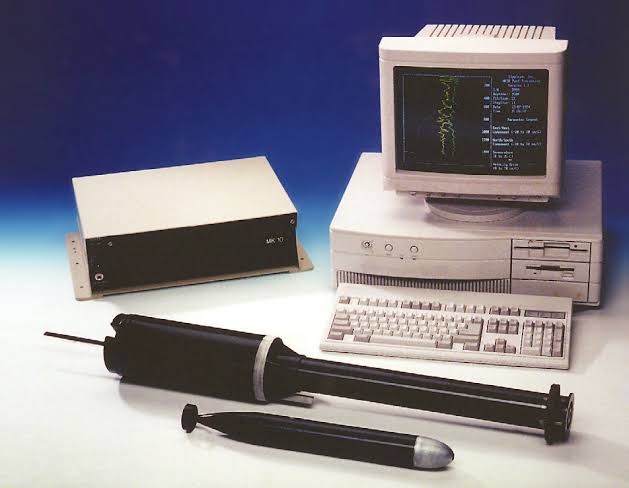
The Expendable Current Profiler (XCP) is equipped with electromagnetic sensors, induction coils, a compass system, a depth‑tracking mechanism, and a thin wire for real‑time data transmission to the receiving system at the surface.
The main function of XCP is:
- To measure the speed and direction of horizontal ocean currents as a function of depth.
- To obtain high‑resolution vertical current profiles in open ocean and coastal waters.
- To support oceanographic, meteorological, and climate‑related research programs.
Types of XCP
- Standard XCP – Designed for deployment from research vessels with typical profiling depths of up to ~1,000 m.
- Air‑deployable XCP – Modified XCP systems that can be deployed from aircraft for rapid surveys, as documented by NOAA operational programs.
The Main Components of XCP
- Electromagnetic induction sensor – Detects electric fields induced by seawater motion through the Earth’s magnetic field.
- Compass and orientation sensor – Determines current direction relative to geographic coordinates.
- Descent system – Controls the fall rate of the probe through the water column.
- Data transmission wire – Sends real‑time measurements to the onboard receiver.
- Surface acquisition unit – Records and processes current velocity data.