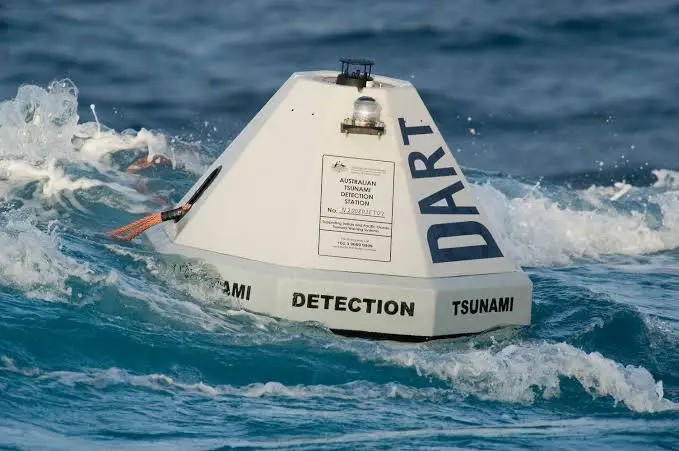
Tsunamis are among the deadliest natural disasters because they occur suddenly and can strike coastal areas within minutes of an undersea earthquake. Countries along the Pacific Ring of Fire, such as Indonesia, Japan, and Chile, are highly vulnerable due to tectonic plate subduction zones. The 2004 Indian Ocean tsunami, which claimed more than 200,000 lives, highlighted the urgent need for reliable Tsunami Early Warning Systems (TEWS). To address this challenge, researchers at the U.S. National Oceanic and Atmospheric Administration (NOAA) developed the DART buoys (Deep-ocean Assessment and Reporting of Tsunamis). This system detects deep-ocean pressure changes caused by tsunamigenic events and transmits real-time data to monitoring centers, allowing authorities to issue early warnings that save lives.
The Instrumen
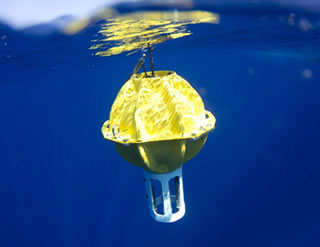
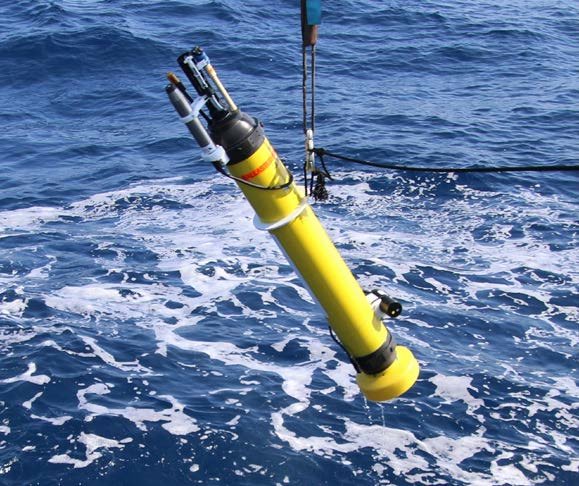
Dart buoys (Deep-ocean Assessment and Reporting of Tsunamis) are an important instrument for the global tsunami early warning system. This technology was developed by NOAA (National Oceanic and Atmospheric Administration) through the Pacific Marine Environmental Laboratory (PMEL). These buoys can observe the passage of a tsunami and relay data related to its arrival time and amplitude in near-real time. These data are used by the Short-term Inundation Forecast for Tsunamis (SIFT) application developed at the NOAA Center for Tsunami Research (NCTR). SIFT combines DART® data with precomputed geophysical models to estimate so-called unit source coefficients. DART works by measuring changes in seawater pressure at the ocean floor using a Bottom Pressure Recorder (BPR), then transmitting the data to the surface via a floating buoy. The data is sent in real time to satellites and tsunami monitoring centers on land for further analysis.
Main Component
- Bottom Pressure Recorder (BPR)
Placed on the seafloor at depths of 1000–6000 m. Detects tiny pressure changes from seabed deformation or tsunami waves. Can measure surface height changes as small as 1 cm. - Surface Buoy
Floats on the ocean surface, equipped with communication antennas. Receives acoustic signals from the BPR and transmits them via satellite. Powered by solar panels and backup batteries. - Acoustic Modem/Link
Connects the BPR with the surface buoy through underwater acoustic signals. Supports two-way communication. - Satellite Transmitter (GOES/Iridium)
Relays data from the buoy to tsunami monitoring centers. Uses dual redundancy to ensure reliability. - Anchor System
Stabilizes the buoy system in deep water under strong currents.
How Dart Buoy Work
The Dart buoy system functions as a chain of interconnected instruments that detect, transmit, and analyze ocean pressure changes to identify possible tsunamis. At the heart of the system lies the Bottom Pressure Recorder (BPR), which is anchored on the seafloor at depths of 1000–6000 meters. This sensor continuously measures the pressure exerted by the water column above it, a value that is directly proportional to ocean depth. Under normal circumstances, the pressure signal reflects predictable variations from tides and surface waves. However, when an undersea earthquake or landslide displaces the seafloor, the water column above it experiences sudden vertical movement. The BPR is highly sensitive and can detect these anomalies even if the sea surface displacement is less than one centimeter, making it ideal for identifying the subtle onset of a tsunami.
Since the BPR is located far below the ocean surface, it cannot directly communicate with satellites. Instead, it uses an acoustic modem to transmit its data upward to a surface buoy floating above. The buoy receives these signals and processes them with onboard computers. Under normal monitoring conditions, the system transmits data at intervals of around 15 minutes to conserve power. However, when the BPR detects an unusual signal that may indicate a tsunami, the buoy switches into “event mode,” increasing both the frequency of measurements and transmissions, sometimes to every 15 seconds. This ensures that any potential tsunami is tracked in near real time.
The surface buoy then relays the information to land-based tsunami warning centers via satellite links, typically using GOES or the Iridium network for global coverage. These data packets contain not only the pressure readings but also diagnostic information such as buoy location, battery health, and system status. Once received at tsunami monitoring centers, such as NOAA’s Pacific Tsunami Warning Center in Hawaii or BMKG in Indonesia, the pressure data are analyzed alongside seismic records and computer-based tsunami propagation models. Specialized algorithms filter out background noise from tides or storms, isolating only the anomalous pressure signals that correspond to tsunami waves.
If the analysis confirms the presence of a tsunami, a warning message is issued to national authorities and coastal communities. This workflow transforms the Dart buoy system into an early detection tool that can provide crucial minutes to hours of warning before tsunami waves strike shorelines. In essence, Dart buoys act as a real-time sentinel of the deep ocean, detecting waves that are invisible to the human eye while they are still thousands of kilometers from land, thereby playing a vital role in global disaster risk reduction.
Dart Buoy strengths and weaknesses
Strengths
- High accuracy in detection; Dart buoys measure small changes in deep-ocean pressure, allowing them to detect tsunami waves that are undetectable by satellites or shore-based systems.
- Real-Time data transmission; equipped with satellite communication, they transmit data almost instantly to tsunami warning centers, enabling early alerts for coastal regions.
- Deep-Ocean monitoring; Dart buoys provide offshore detection, giving more lead time for evacuation.
- Critical role in forecast models; their data improves tsunami propagation and inundation models, making forecasts more reliable for disaster mitigation planning.
Weakness
- High cost and maintenance; installation and upkeep are expensive due to deep-sea deployment, and maintenance requires specialized ships and divers.
- Vulnerability to harsh conditions; buoys are exposed to storms, currents, vandalism, and even theft, which can cause system failures.
- Data gaps and reliability issues; sometimes buoys malfunction or transmit incomplete data, reducing real-time reliability of warnings.
Writer : Shine Nataline